Minneapolis sewer & drain cleaning done right the first time
Older Minneapolis housing sits on clay main lines and, in many neighborhoods, still-combined storm-and-sanitary sewers — a mix that produces the basement backups, root intrusions, and slow drains we see every week. Kitchen sinks, tubs, floor drains, main lines, and camera-guided diagnostics for Minneapolis homeowners and businesses.
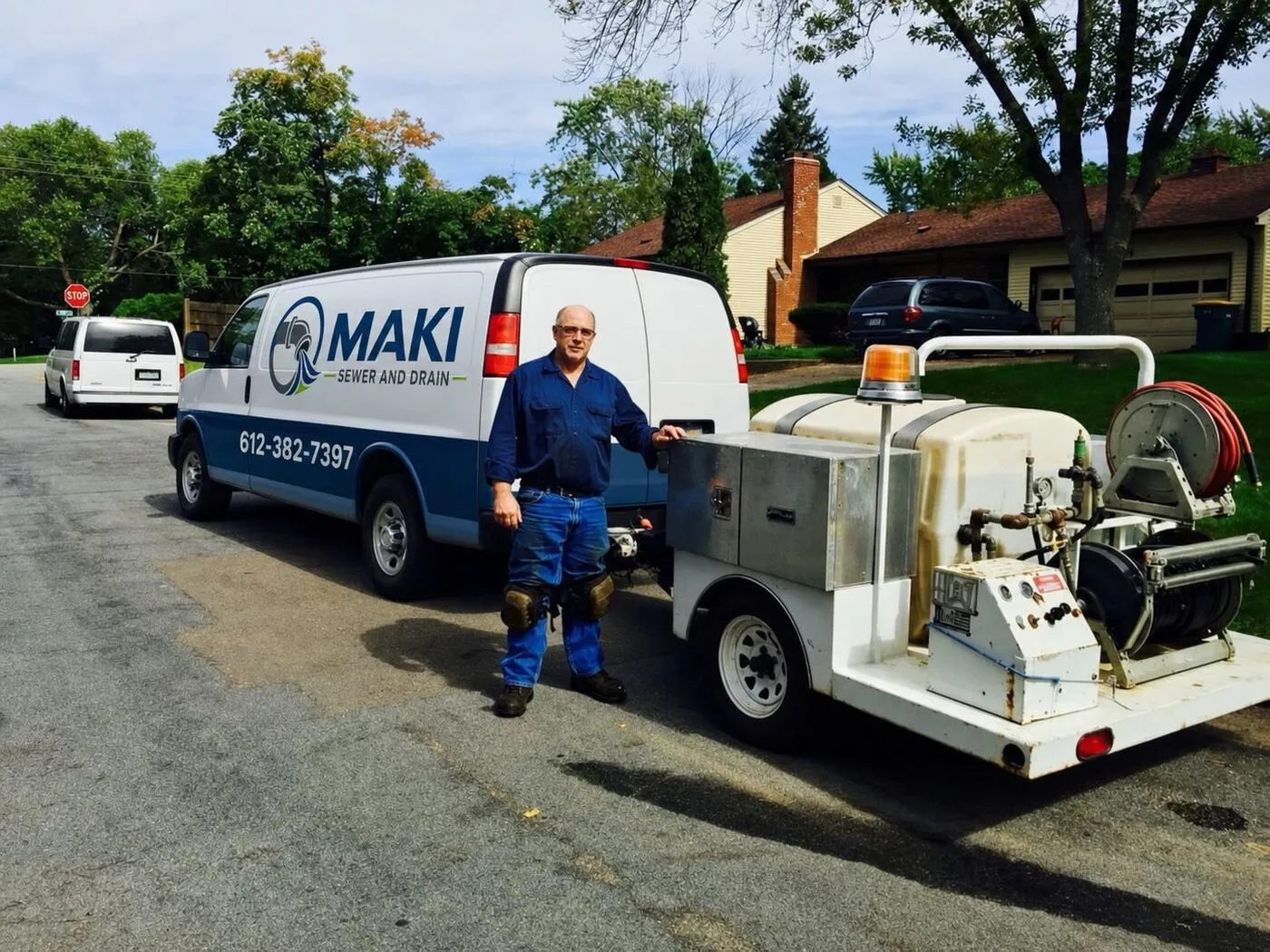
Van-mounted hydro jetting on a Minneapolis main line — the tool that actually clears grease and root debris to bare pipe.
One of the oldest sanitary sewer systems in the Upper Midwest — and the grants that help homeowners fix theirs
Minneapolis Public Works maintains one of the largest sanitary sewer networks in Minnesota. If your sanitary lateral (the pipe from your house to the main) is failing, or your basement floor drain is backing up because of I&I from cracked laterals and improperly connected rainleaders, the city has homeowner programs to help pay for the fix.
Sources: Minneapolis Public Works — Sewer System Overview · History of stormwater & wastewater in Minneapolis
What we see in Minneapolis homes
Minneapolis has one of the oldest sewer systems in the Upper Midwest — the first city sewer was built around 1870 under Washington Avenue South. That history is what shapes the drain and sewer problems we see across the city.
Housing stock: A large share of Minneapolis homes were built between 1900 and 1940, meaning original clay sewer laterals under the yard are common. Newer neighborhoods on the edges have PVC or cast iron.
Common pipe material: Per Minneapolis Public Works history, clay has been the preferred material for city sewer pipes up to 33″ in diameter since 1896 — and it is still the dominant material under the older core of the city today.
What we see most in Minneapolis: Root intrusion at aging clay joints, kitchen-line grease buildup in older duplex conversions, and basement backups tied to combined-sewer overflow (CSO) areas after heavy rain.
Neighborhoods and areas we regularly work in: North Loop, Northeast, Uptown, Longfellow, Nokomis, Powderhorn, Whittier, Camden, Downtown, and the Southwest neighborhoods.
Minneapolis ZIP codes, grouped by neighborhood
Minneapolis is covered by 51 standard ZIP codes. Here is how the map lines up with the neighborhoods we drive to every week.
If your Minneapolis ZIP is not listed, call 612-382-7397 — we serve the entire city and most surrounding first-ring suburbs.
What Minneapolis looks like from our van
Real photos from real service calls — we’re out here every week.


Who handles what in Minneapolis
Sanitary sewer service in Minneapolis is run by Minneapolis Public Works — Surface Water & Sewers Division, which feeds into the Metropolitan Council’s regional wastewater system. Here is who to call for what, plus the pipe realities that shape service calls in the city.
Services for Minneapolis homeowners & businesses
The full drain and sewer toolkit — not just cabling. If it flows out of your house, we service it.
Drain cleaning
Kitchen sinks, tubs, showers, laundry, and floor drains cleared same day.
Main sewer line cleaning
House-to-street line cabling and hydro jetting for backups and slow drains system-wide.
Hydro jetting
High-pressure water scours grease, sludge, and roots to bare pipe.
Sewer camera inspection
See exactly what is inside your line, with video you can keep.
Homebuyer camera inspection
Scope the sewer before you buy and avoid inheriting a repair bill.
Trenchless pipe repair
Rebuild a failing line from the inside — no digging up the yard.
Grease trap service
Pump-out, scraping, jetting, and disposal records for food service.
Emergency service
Sewage backing up? Water where it should not be? Call 612-382-7397 anytime.
Oliver Ave storm sewer rebuild (Lynnhurst) + Chowen Ave sanitary sewer project (Linden Hills)
What's happening in Minneapolis right now
Two major residential sewer projects are on the calendar in Southwest Minneapolis. The Oliver Avenue Storm Sewer Improvements Project in the Lynnhurst neighborhood started construction July 13, 2026 and runs through Summer 2027 — Oliver Ave S between West 50th and Lake Harriet Parkway, plus West 50th between Oliver and Penn. Design is underway for the Chowen Avenue South Sewer Improvements in Linden Hills (West 38th to West 40th), replacing 2,550 feet of failing storm and sanitary pipe in Spring 2027. Both projects are addressing old, cracked pipes that let groundwater into the sewer system and raise the risk of backups.
What this means for your drains
If you own a home in Lynnhurst, Linden Hills, Kenwood, Fulton, or any of the older Southwest Minneapolis neighborhoods with clay-tile sewer laterals, this matters to you directly:
- The city fixing their portion of the sewer doesn't fix your lateral — the pipe from your house to the city main is your responsibility, and it's often the same 80–100-year-old clay tile the city is currently replacing
- When water tables shift during a nearby dig, laterals with existing cracks start letting in more groundwater and backing up faster
- Old cast-iron main-house stacks in prewar Minneapolis homes are frequently rusted through — a camera inspection catches this before it becomes a basement flood
If you're in a Southwest Minneapolis home built before 1960 and you haven't had a sewer scope in the last 5 years, now is the time. We work all Minneapolis neighborhoods, and we can pull the city's records on your lateral before we come out.
Call 612-382-7397 or book a camera inspection.
Sources: City of Minneapolis — Chowen Ave S Sewer Improvements · Minneapolis 13th Ward — Oliver Ave Storm Sewer
Source: City of Minneapolis Public Works · Updated 2026-07-22
Straight answers, honest work, the right method for your line
Local, not a franchise
Owner-operated, serving Minneapolis daily. When you call, you get the person doing the work — not a call center.
Camera-equipped
Every main line clog gets a look. You see what we see. No mystery invoices, no upsell for repairs that are not needed.
Right tool for the job
Cable, jet, or camera-guided repair — we match the method to the actual problem, not to the biggest ticket.
Same-day, most days
Minneapolis is inside our normal daily route. If you call before mid-afternoon, most days we can be out today.
Minneapolis and the surrounding area
Sewer or drain problem in Minneapolis?
Tell us what is going on and we will follow up fast — usually same day.
Frequently asked questions — Minneapolis
How fast can you get to Minneapolis?
We typically respond same-day for drain calls in Minneapolis. Call 612-382-7397 in the morning for best odds of same-day service; we'll give you an honest ETA before we roll.
Do you serve every ZIP code in Minneapolis?
Yes — we cover the ZIP codes serving Minneapolis (55401, 55402, 55403, 55404, 55405, 55406, 55407, 55408, 55409, 55410, 55411, 55412, 55413, 55414, 55415, 55416, 55417, 55418, 55419, 55420, 55423, 55424, 55425, 55426, 55427, 55428, 55429, 55430, 55431, 55432, 55435, 55436, 55437, 55438, 55439, 55441, 55442, 55443, 55444, 55445, 55446, 55447, 55448, 55449, 55450, 55454, and 55455) and the surrounding community. Call to confirm your address.
What's the most common drain problem in Minneapolis?
Minneapolis has one of the oldest sewer systems in the Upper Midwest — the first city sewer was built around 1870 under Washington Avenue South. That history is what shapes the drain and sewer problems we see across the city. Housing stock: A large share of Minneapolis homes were built between 1900 and 1940, meaning original clay sewer laterals under…