

Frozen line right now? Call 612-382-7397. We answer.
How to tell a frozen line from an ordinary clog
A few things point to ice rather than a normal blockage:
- It started during or right after a cold snap — especially the first hard freeze of the season.
- It got worse fast. A grease clog usually slows down over weeks. A freeze can go from slow to fully stopped in a day or two.
- The line runs along an exterior wall, through an unheated crawlspace, or over a garage. Any drain pipe on an outside wall — particularly one above grade — has a real tendency to freeze.
- It eases up in warmer weather and comes back with the next cold stretch.
Kitchen sink lines are far and away the most common frozen drain we get called on.
Why drain lines actually freeze
This is the part most people never get explained, and it's why a freeze is almost never just a freeze.
It usually starts with a partial blockage. Grease, food waste, soap sludge, mineral scale — the kind of buildup that narrows a pipe without stopping it. That buildup could cause a backup any month of the year, including July.
Once it's cold out, here's the sequence:
- Water runs, hits the restriction, and slows down.
- Sitting water over that restriction freezes into a thin layer of ice.
- Next time water runs, another layer freezes on top of the first.
- Repeat that over a few days of normal household use and the ice grows until the line is fully blocked.
- Now when water runs, it fills the whole pipe instead of passing through — and the entire cold-exposed length freezes at once. That's a much bigger blockage than what you started with.
The takeaway: thawing the ice gets your drain back today. It does nothing about the restriction that let the ice start. That's why we thaw and clean.
Frozen sewer mains and bellies
The same layering happens in a main, with one addition: a belly. That's a low, sunken section of the line that holds standing water all the time. A lot of sewer mains have one — often without the homeowner ever knowing, because it drains fine the rest of the year.
In a belly, there's always water sitting there to freeze. Each time the house uses water, another layer goes on top, and eventually you get an ice dam.
We don't treat a belly as an automatic dig. Plenty of mains have a belly and run fine with periodic cleaning. Replacement is a conversation, not a reflex — and it starts with actually seeing the pipe on camera, not guessing.
Frost depth also matters. In some winters the frost line pushes deeper than usual, and lines that never had a problem suddenly do.
How we thaw a frozen line
Hot water, low and slow, then open it up.
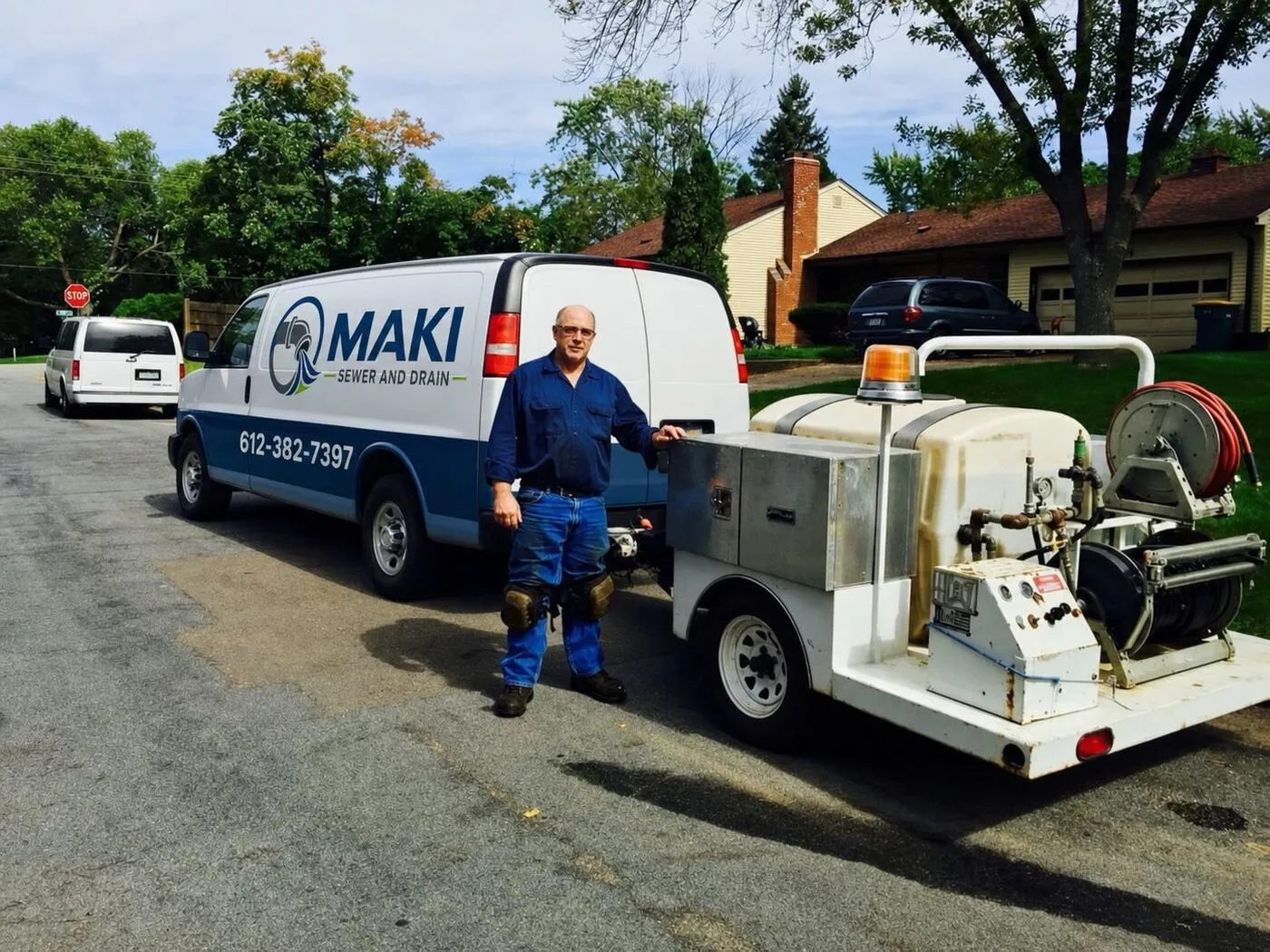
We start with a hot water hydro jet and a specialized nozzle at low volume and low pressure — enough to open a channel so the standing water behind the ice can drain out, without stressing the pipe. Once it's draining, we increase flow and pressure until the ice is fully cleared.
Hot water isn't strictly required, but it works considerably faster, especially on mains. On main lines we use heated water direct from our tanks. On smaller drains, hot tap water does the job.
If the frost has gone deep enough that the line is frozen well past the initial blockage, we thaw our way through and then clean the rest of the line out.
Cleared and cleaned are not the same thing
This distinction matters more than almost anything else on this page.
Clearing a line means the blockage is gone and water moves again. A cable with a properly sized blade will do that — and everything will look fixed.
Cleaning means the inside wall of the pipe is actually clean.
On a greasy kitchen line, a cable punches through the blockage but leaves a significant layer of grease coating the pipe walls. Elbows and bends hold the most. The drain runs, you're happy, and the buildup starts closing back in from day one — which is exactly the restriction that freezes again next cold snap.
That's why we recommend a hydro jetter for most kitchen sink and floor drain lines. It scours the wall instead of boring a hole through the middle. On a line that just froze, it's the difference between a fix and a rerun.
What to do before we get there
- Stop running water into the line. Every gallon adds another layer of ice and makes the blockage bigger.
- Don't pour boiling water down a frozen drain. Rapid temperature swings are hard on pipe, especially older cast iron and PVC joints.
- Skip the chemical drain openers. They won't move ice, and they create a hazard for whoever opens that line up.
- If sewage is backing up into the house, stop all water use in the building — including laundry and toilets — and call.
After the thaw
Once the line is open and clean, a few things are worth knowing:
- A camera inspection tells you whether you're dealing with a belly, a root intrusion, a bad joint, or just accumulated grease. Same symptom, four different answers.
- If the pipe itself is failing, trenchless repair is usually an option without tearing up the yard in February.
- Lines that froze once will freeze again on the same schedule unless the underlying restriction gets dealt with.
Backed up right now, at any hour? See emergency service or call 612-382-7397.