What this service solves
A grease trap is only one part of the kitchen drainage system. The trap, kitchen drain line, floor drains, and downstream piping all work together. If grease builds up in any part of that system, you can end up with slow drains, odors, backups, or repeat service calls.
We help identify whether the problem is in the grease trap, the kitchen line, a floor drain, or farther downstream. That matters because pumping or cleaning one part of the system will not solve the problem if grease and sludge are packed into another section of pipe.
When the line itself is coated with grease, hydro jetting is often the most effective way to clean the pipe wall. Cable cleaning may open a path and get water moving, but jetting removes more of the grease and sludge that causes recurring commercial kitchen backups.
Who this service is for
Grease trap service is a fit for restaurants, commercial kitchens, office-building kitchens, care facilities, churches, schools, cafeterias, convenience stores, bars, and other properties where food preparation sends grease, solids, and wastewater into the drain system.
If you manage a property and are not sure whether the problem is the trap, the drain line, or the main line, call and describe what is backing up. We can help narrow down the likely cause before recommending a service.
Grease trap service and drain cleaning work together
A neglected grease trap can cause odors and backups, but a cleaned trap does not always mean the line downstream is clean. Kitchen drain lines can stay coated with grease even after the trap is serviced. When that happens, hydro jetting or follow-up drain cleaning may be needed to restore flow.
We explain what we find, what was done, and whether a maintenance schedule would help prevent repeat backups.
What grease trap service can include
Grease trap service is more than opening a clogged drain. For commercial kitchens, the work may include cleaning the trap, checking the parts that control flow, hydro jetting the connected lines, and helping the customer keep the records often needed for health-department or city requirements.
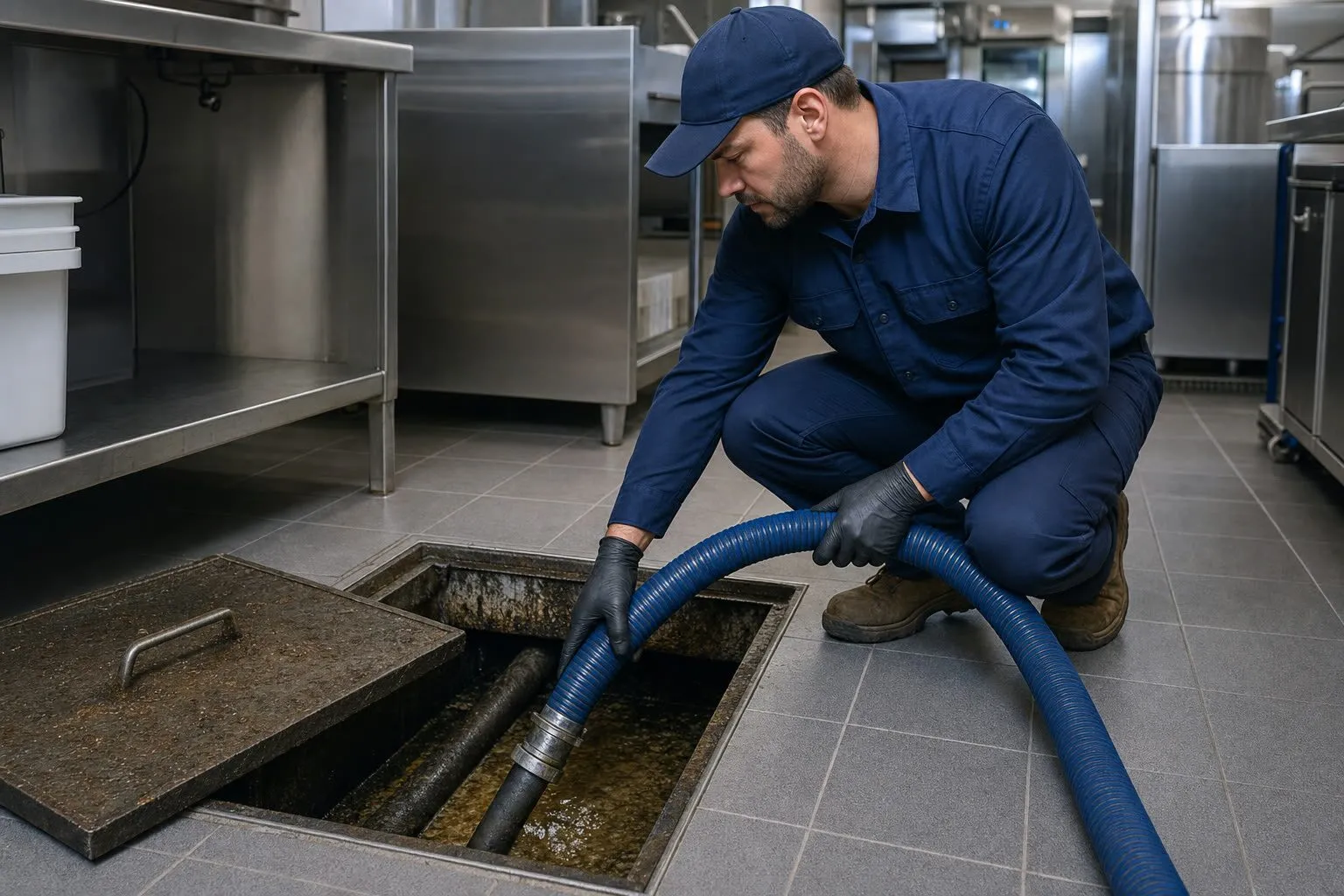
- Pump or clean accumulated FOG, grease, oil, food solids, and wastewater buildup on a schedule that matches the trap size and kitchen volume
- Scrape walls and baffles so the inside of the trap is physically cleaned and can separate grease properly
- Inspect baffles, tees, inlet piping, and outlet piping for visible damage or flow problems
- Hydro jet the inlet and outlet lines when grease or sludge buildup is affecting the connected drain lines
- Provide a manifest or receipt for grease waste disposal when required for the customer’s records
- Help customers understand service logs and compliance records that many cities or health departments may require
Signs you should call
- Kitchen drains are slow or backing up
- Odors are coming from the trap or floor drains
- Grease-related backups keep returning
- A restaurant or care facility needs service documentation
- Floor drains back up during kitchen use
How the service call works
- Confirm the site type, access, urgency, and service-record needs
- Determine whether the issue points to the trap, branch line, floor drain, or main line
- Pump, clean, scrape, or inspect the grease trap as needed
- Use hydro jetting when grease buildup in the inlet, outlet, or connected line needs deeper cleaning
- Explain what caused the issue and whether a 30-, 60-, or 90-day maintenance schedule would help
Grease trap service that supports kitchen compliance
A grease trap is not just a tank that gets pumped. For the trap to work properly, accumulated fats, oils, grease, and solids need to be removed, the walls and baffles should be cleaned, and inlet and outlet flow should be checked. Many kitchens also need service records for health department or city compliance.
Maki Sewer and Drain can combine grease trap cleaning with inlet and outlet line jetting when the lines are slow, greasy, or backing up. That overlap matters because the trap and the drain lines work as one system.
Related: commercial drain cleaning, hydro jetting, and emergency drain service.