What this service solves
Trenchless pipe repair fixes a failing sewer line with little or no digging. Instead of excavating the full length of the pipe, the line is cleaned, inspected, and rehabilitated from the inside — which protects landscaping, driveways, and finished spaces.
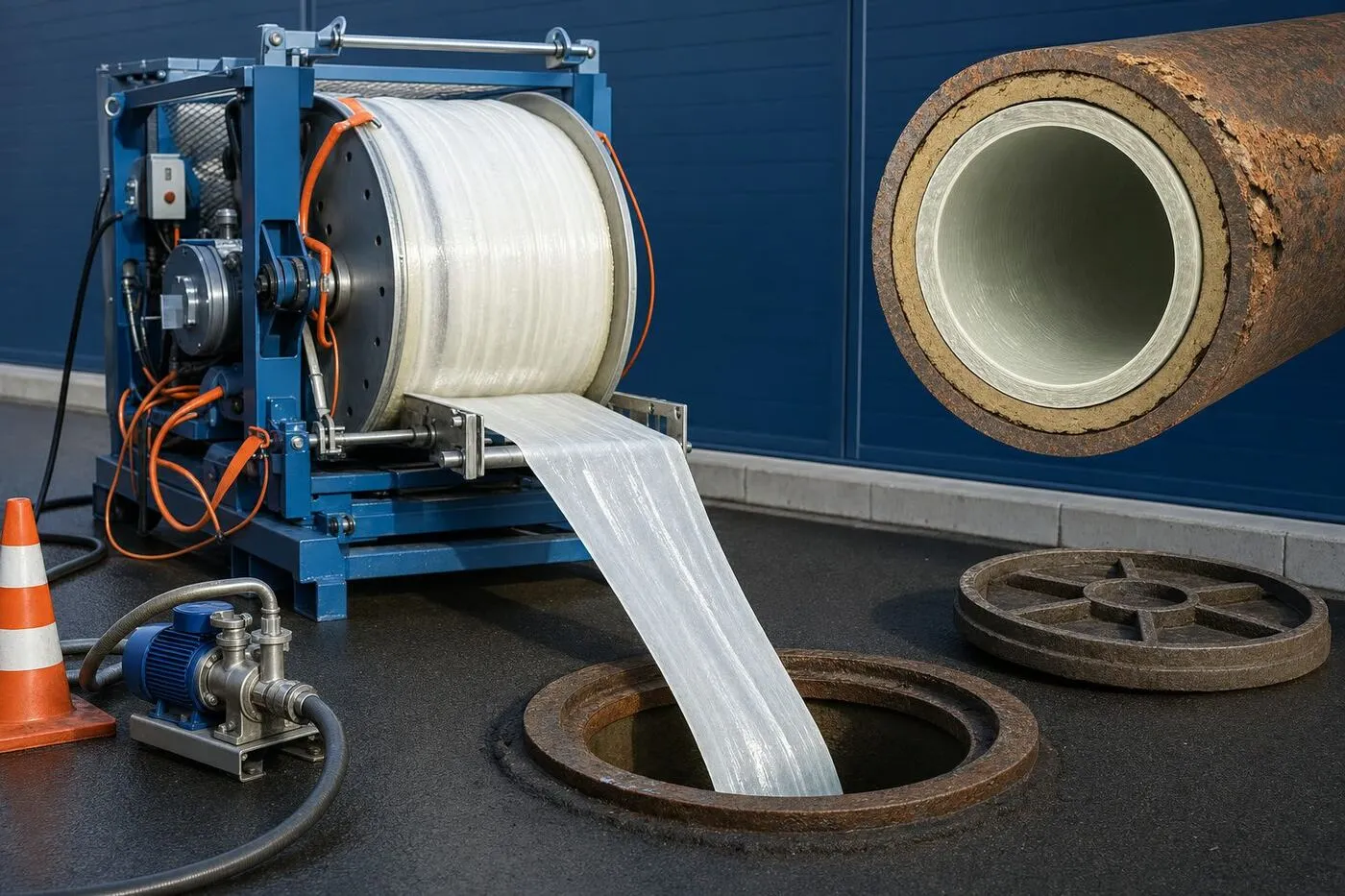
The technical method behind it is CIPP, or cured-in-place pipe. A resin-saturated liner is installed inside the existing pipe and cured to form a new pipe wall within the old one. CIPP pipe lining is a strong option for cracks, root intrusion, and small offsets when the original line still holds its shape and structure. It is not right for every pipe: collapsed sections, severe bellies, bad transitions, or major grade problems may still need excavation.
How we decide if your pipe is a good candidate
Every trenchless repair starts with cleaning and a camera inspection. We need to see the real condition of the pipe — its shape, grade, breaks, joints, and transitions — before we can say whether CIPP lining will work or whether a section needs to be dug and replaced. We explain the line-or-dig decision honestly, with no pressure.
Signs you should call
- Camera footage shows cracks or root entry
- The sewer keeps backing up from the same defect
- You want to avoid digging up landscaping
- The pipe is old but still holds its shape
- You need a plan before a larger sewer repair
How the service call works
- Clean the line so the pipe can be inspected
- Camera the full accessible run
- Determine whether the pipe is a lining candidate
- Explain trenchless lining versus excavation
- Plan next steps with clear expectations and no pressure
When trenchless pipe repair makes sense
Trenchless pipe repair is usually considered when a line has cracks, gaps, root intrusion, rough pipe, or localized damage, but the pipe is still a good candidate for lining. It is not the right answer for every sewer problem, which is why camera inspection and cleaning come first.
The goal is to rebuild the damaged pipe from the inside where possible, reducing the need to dig up the yard, driveway, or finished surfaces. A camera inspection helps determine whether trenchless repair, spot repair, or replacement is the right path. If a frozen line turns out to have real pipe damage behind it, lining is often possible without opening up the yard in the middle of winter.
Related: sewer camera inspection, main sewer line cleaning, and hydro jetting.